
TL;DR
- A well-designed living room balances comfort and style — layout and usability matter more than decoration alone
- Layered lighting, neutral colors, and proper furniture placement create a naturally inviting atmosphere
- Textures, rugs, curtains, and plants add warmth without overcrowding the space
- Avoid common mistakes like oversized furniture, harsh lighting, and blocking natural light
- Choosing a style that matches your lifestyle ensures the design remains functional and timeless
Introduction
The living room is more than just a place to sit; it’s where conversations happen, guests gather, families relax, and daily life unfolds. Because it plays multiple roles, a successful living room home interior design must balance visual elegance with everyday comfort — something often achieved through thoughtful planning rather than decoration alone, which is why Professional home interior design services focus heavily on how the space will actually function.
Many homes look beautiful in photos but feel impractical in real life. Others are comfortable but lack personality. The goal of a well-planned living room is to achieve both: a space that looks refined and also feels inviting to use every day.
In this guide, you’ll learn how thoughtful planning, layout, lighting, materials, and styling choices can transform your living room into a functional yet sophisticated space.
What Makes a Living Room Well-Designed?
A well-designed living room isn’t defined by décor alone, but by how comfortably it supports everyday living. Good living room interior design balances style with functionality so the space feels inviting and easy to use, a principle commonly followed in structured interior design services where usability is prioritized from the beginning.
Comfort vs Decoration
The room should support real activities relaxing, reading, watching TV, or hosting guests.
When comfort is ignored, the space feels staged instead of welcoming. Usability should always come before aesthetics.
Plan the Layout First
Furniture placement determines how the room works.
Create clear walkways, proper seating arrangements, and a defined focal point before choosing colors or accessories. Décor should enhance the layout, not fix it.
Lighting, Textures & Functionality
A balanced living room includes:
- Layered lighting
- Comfortable seating
- Easy movement space
- Warm, pleasant materials
These elements together create a natural and comfortable atmosphere.
Design Around Your Lifestyle
Every home has different needs. Families, working couples, and frequent hosts require different layouts.
The best living room interiors reflect daily habits rather than temporary trends.
10 Living Room Home Interior Design Ideas
1. Layered Lighting for a Warm and Inviting Ambience
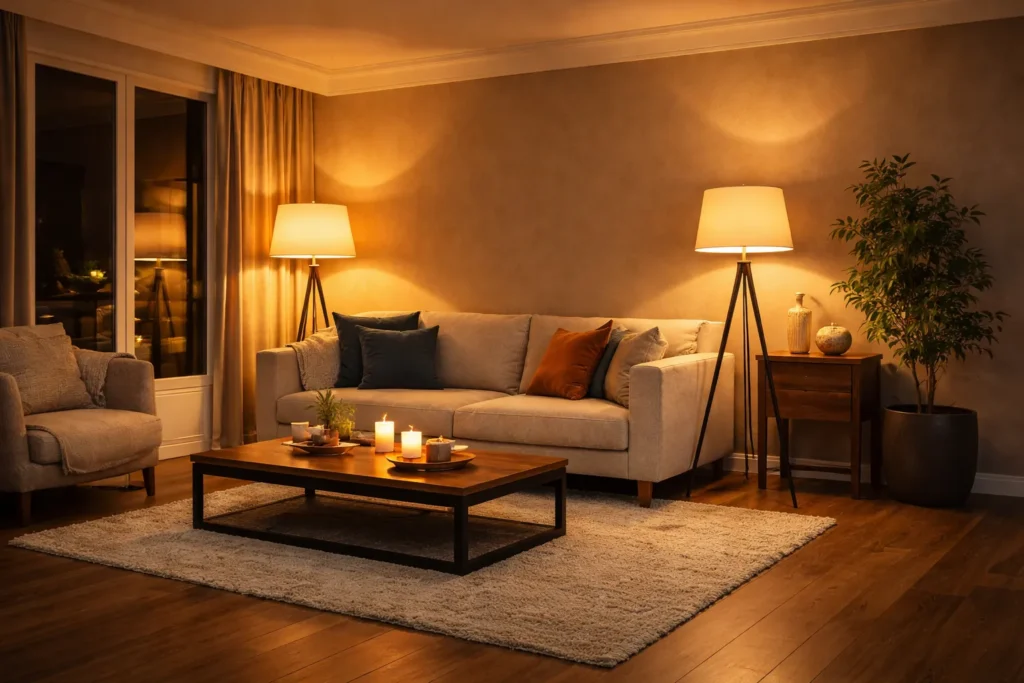
Lighting has a greater impact on mood than any décor element. Instead of relying on a single ceiling fixture, use a layered lighting approach to make the living room feel comfortable and visually balanced.
- Ambient lighting – provides overall brightness
- Task lighting – supports reading or focused activities
- Accent lighting – highlights artwork and décor features
Combining these layers adds depth during the day and creates a relaxing atmosphere at night. Warm light tones help the living room feel calm, welcoming, and naturally comfortable
2. Start with a Neutral Base and Add Accent Colors
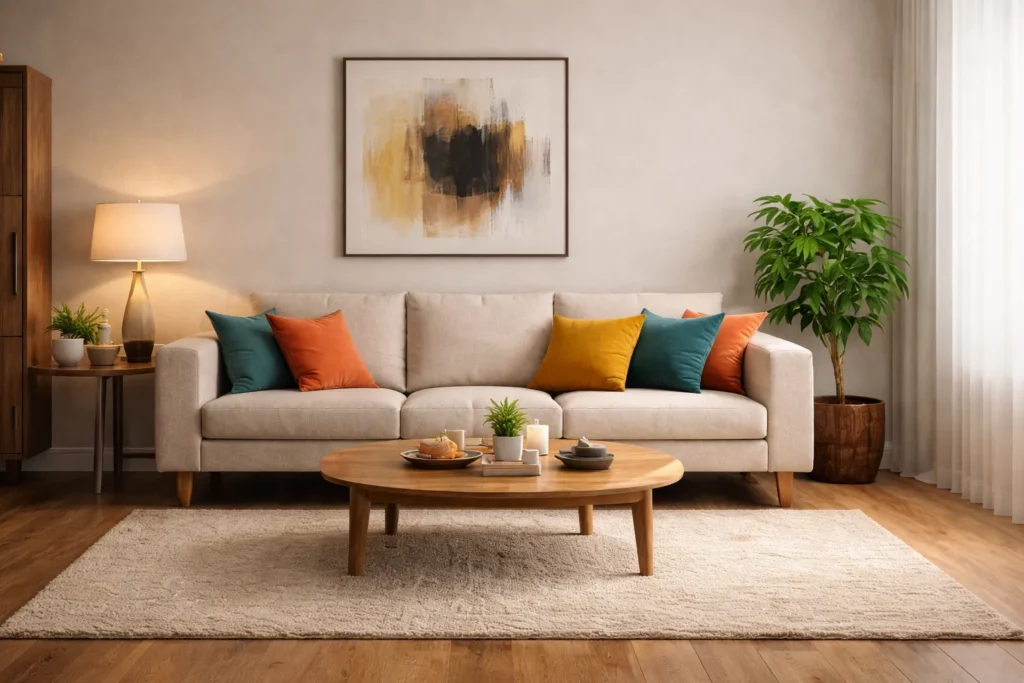
A neutral foundation keeps the living room timeless and visually balanced. Shades like beige, ivory, and soft grey create a calm backdrop while preventing the space from feeling busy or overwhelming.
You can then introduce personality through small decorative elements:
- Cushions
- Throws
- Artwork
- Rugs
This approach makes it easy to refresh the look seasonally without changing the entire interior, keeping the living room flexible and stylish over time.
3. Make the Sofa the Visual Anchor of the Room
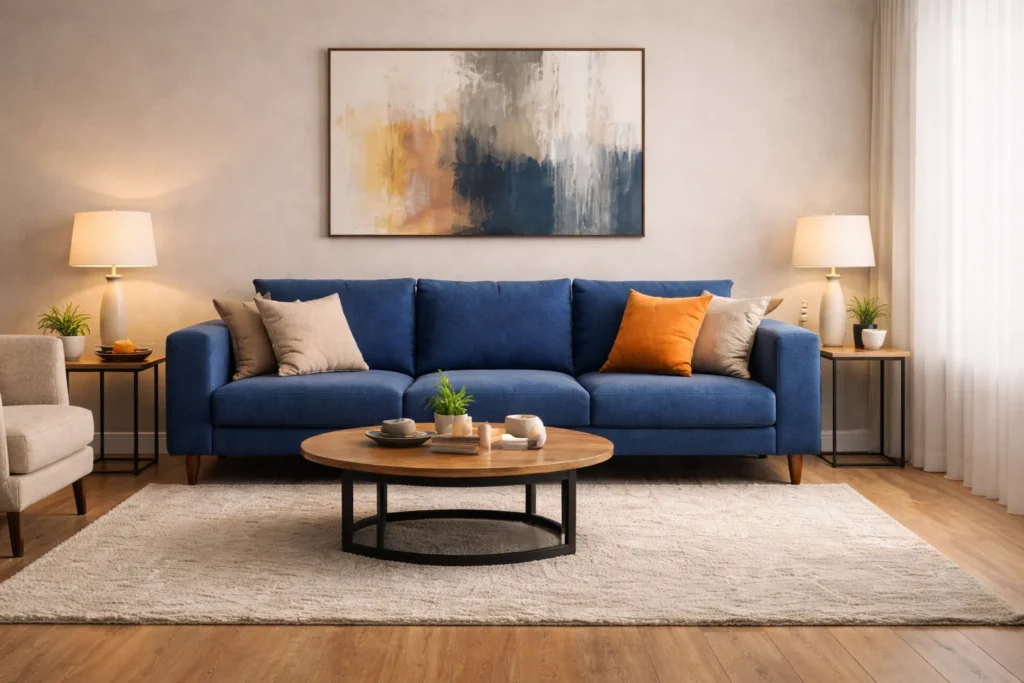
The sofa is usually the most used furniture piece and naturally becomes the focal point of the living room. Start by choosing the right size for the space, then select a style that complements the overall interior.
Placement tips:
- Leave comfortable walking space around seating
- Orient seating toward conversation areas or the main focal point
- Avoid pushing all furniture directly against the walls
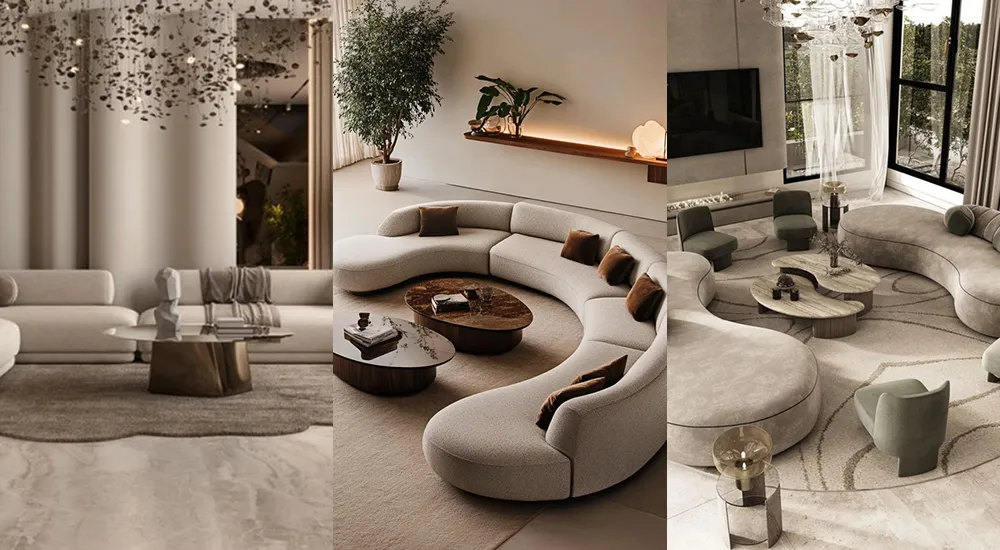
Well-balanced layouts are easier to understand when seen in real residential projects rather than diagrams alone.
A properly positioned sofa helps organize the layout and makes the room feel balanced and inviting.
4. Combine Textures to Add Depth and Interest
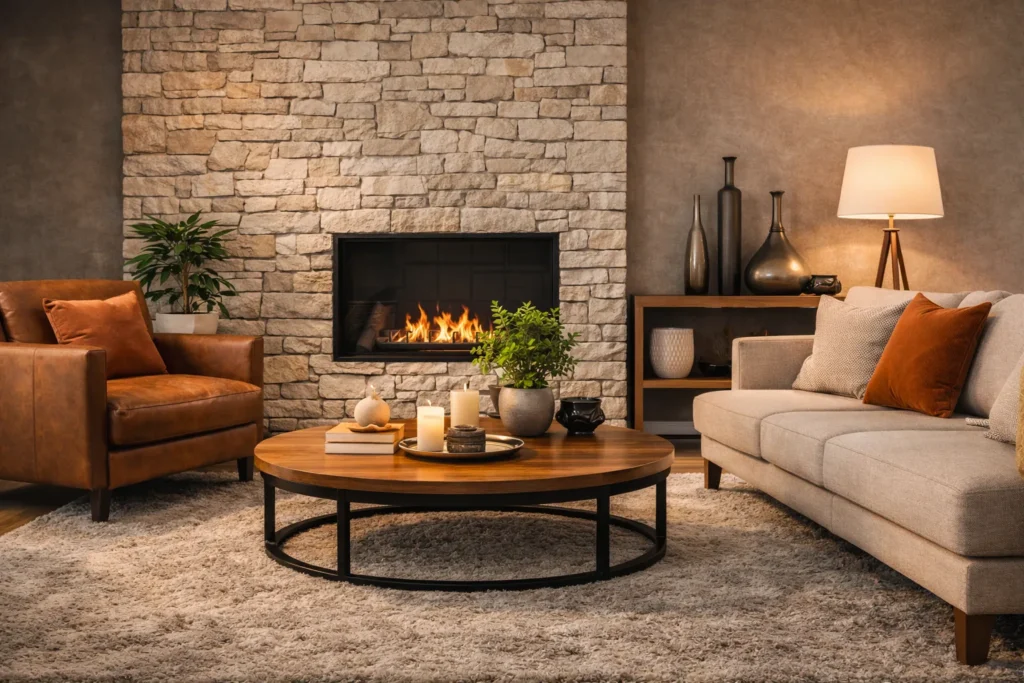
Even simple living rooms feel more refined when different materials are layered thoughtfully. Mixing textures adds character without making the space look crowded.
Try combining:
- Soft fabrics
- Wood surfaces
- Metal accents
- Stone or ceramic elements
Using varied textures prevents the interior from appearing flat and brings natural warmth and visual interest to the room.
5. Plan a Functional Furniture Layout
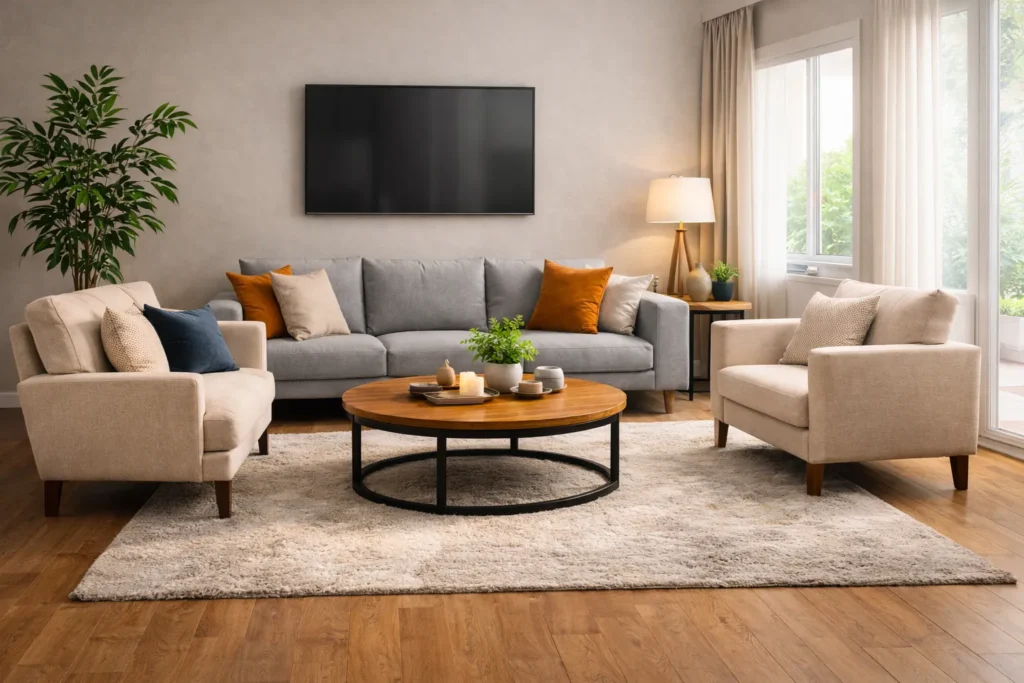
A living room may look attractive, but it won’t feel comfortable if movement is restricted. Proper furniture placement ensures the space works naturally for daily use.
Always keep clear walking paths and arrange seating according to how the room is used:
- Conversation-focused seating for social gatherings
- TV-oriented layout for entertainment
- Balanced layout for multi-purpose living
A thoughtful layout makes the living room easy to use and effortlessly comfortable.
6. Use Area Rugs to Define and Organize Space
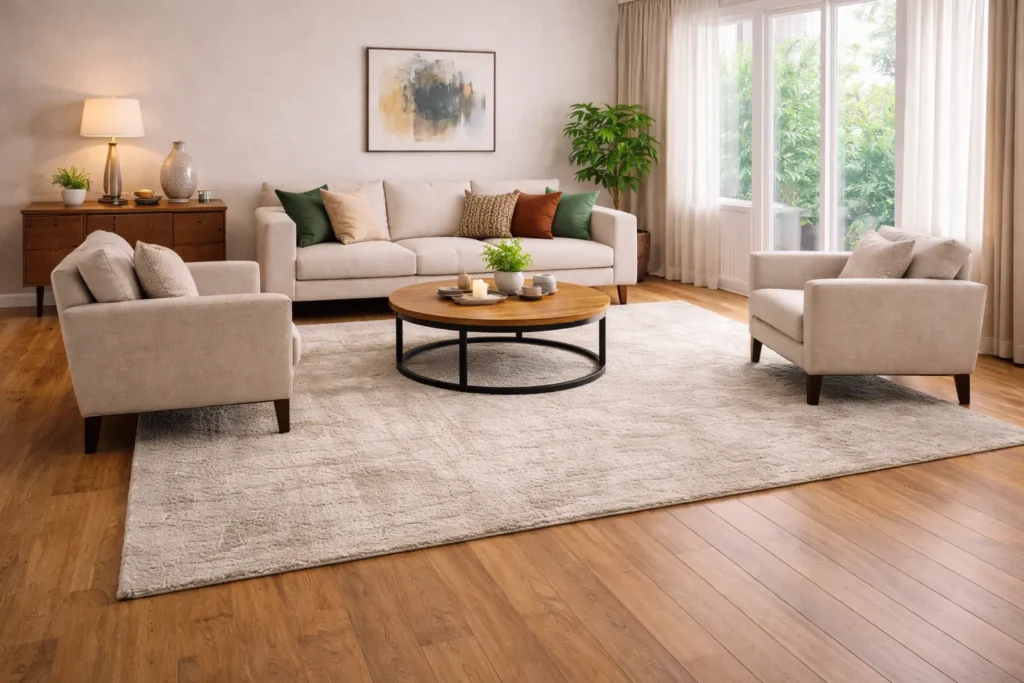
Area rugs help visually connect furniture and organize the living room into a clear seating zone. They add structure while making the space feel warmer and more comfortable.
Simple rule:
The front legs of the main furniture should rest on the rug.
This creates visual cohesion and makes larger rooms feel more intimate and well-arranged.
7. Add Indoor Plants for Natural Freshness
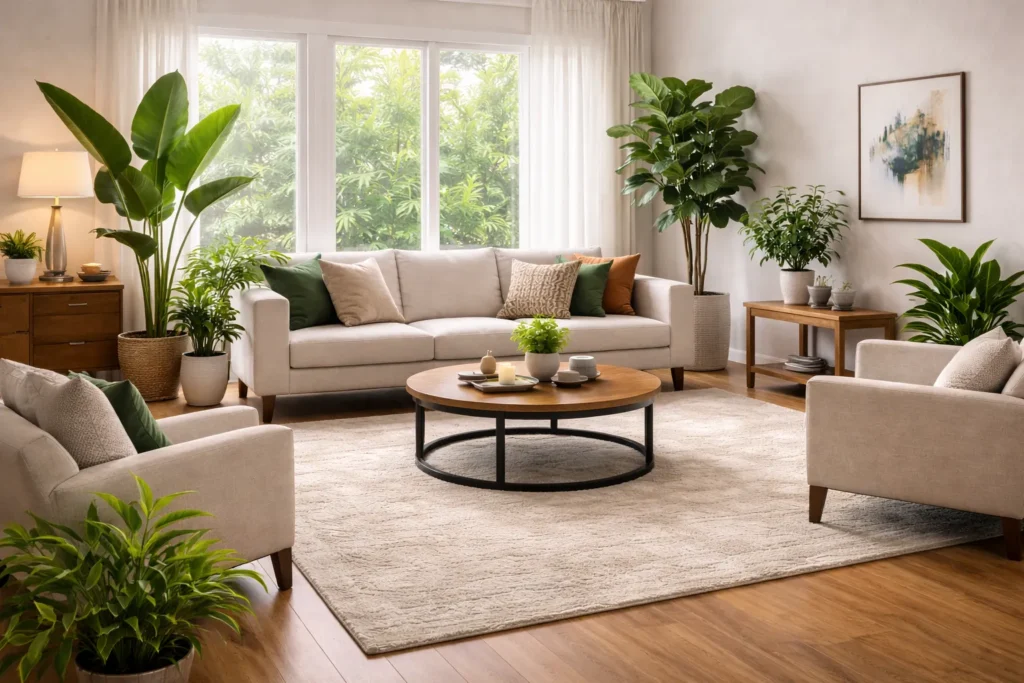
Indoor plants instantly soften a living room and improve its overall atmosphere. They introduce natural color, add warmth, and reduce the rigid feel of furniture-heavy spaces.
Best placement ideas:
- Empty corners
- Near windows
- Beside sofas or side tables
Even a single well-placed plant can make the room feel fresher and more welcoming.
8. Create a Feature Accent Wall or Paneling
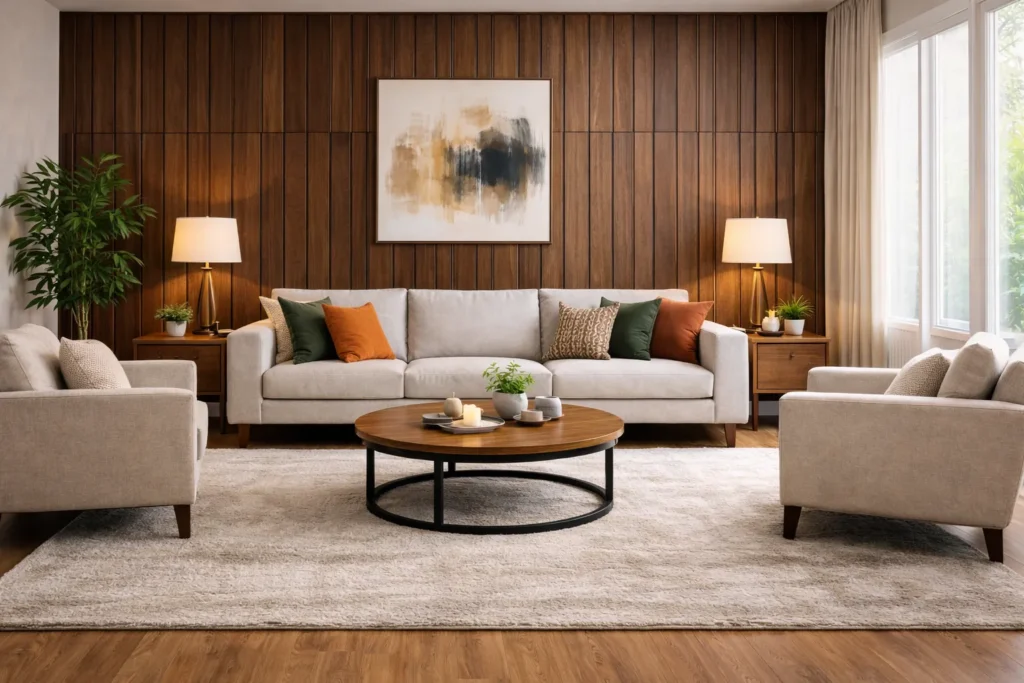
A feature wall helps create a clear focal point without overcrowding the room with décor. Instead of decorating every wall, highlight one surface to add visual interest.
Popular options:
- Wooden panels
- Textured paint
- Wallpaper
- Stone finish
An accent wall adds depth and character while keeping the living room clean and balanced.
9. Choose Curtains that Soften and Elevate the Room
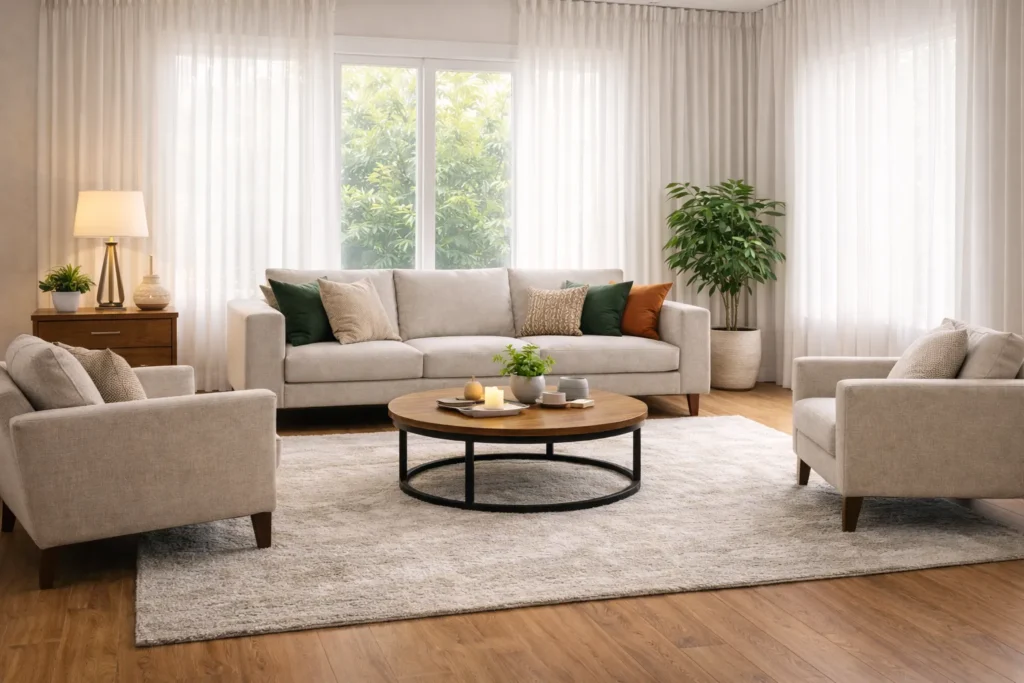
Curtains influence how spacious a living room feels. Hanging them closer to the ceiling rather than the window frame visually increases the height of the space.
Layering tip:
- Sheer curtains for daylight
- Blackout curtains for privacy
This combination improves functionality while making the room appear taller and more elegant.
10. Design a Cozy Corner or Reading Nook
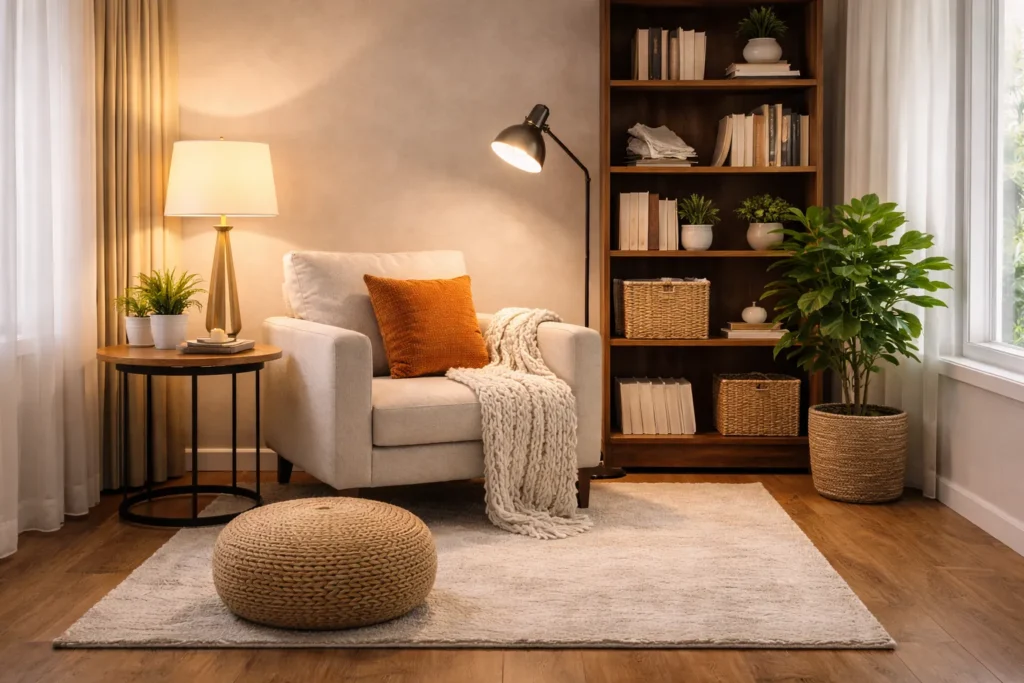
Unused corners can easily become wasted space. Turning them into a small comfort zone adds both function and charm to the living room.
Add:
- An armchair
- A side table
- A floor or table lamp
This simple setup creates a quiet spot for reading or relaxing and makes the room feel more complete and inviting.
Common Living Room Design Mistakes to Avoid
Even a stylish living room can feel uncomfortable if basic planning mistakes are ignored. Small design errors often affect usability more than décor choices. Paying attention to proportion, lighting, and space flow keeps the room both functional and visually balanced.
- Oversized furniture blocking movement – Large sofas or tables reduce walking space and make the room feel cramped. Always leave clear circulation paths around seating.
- Single harsh ceiling lighting – One bright light creates glare and shadows. Use layered lighting to make the space warm and comfortable.
- Ignoring furniture proportions – Very small furniture in a large room or bulky pieces in a compact space disturbs balance. Match furniture scale with room size.
- Too many competing colors – Excessive colors create visual noise. Limit the palette and use accents thoughtfully.
- Blocking natural light with heavy décor – Thick curtains or tall furniture near windows reduce brightness and openness. Keep window areas light and uncluttered.
Avoiding these common mistakes helps the living room feel spacious, comfortable, and easy to use every day.
How to Choose the Right Living Room Style for Your Home
Choosing a living room style is not only about following trends — it should suit your home’s architecture and your daily lifestyle. A consistent style creates visual harmony and makes the space feel more natural and comfortable.
- Modern: Clean lines, simple forms, and practical layouts focused on function
- Contemporary: Trend-inspired design that evolves with current décor preferences
- Minimalist: Calm, clutter-free spaces with limited colors and essential furniture only
- Classic: Symmetry, balanced proportions, and timeless detailing
- Luxury: Premium materials, refined finishes, and carefully layered elements
Instead of copying popular designs, select a style that complements your home structure and how you actually live. A suitable style stays appealing for years, while trends change quickly.
Final Thoughts
Comfort brings long-term satisfaction, while style creates visual harmony. A successful living room doesn’t prioritize one over the other; it blends both through thoughtful planning.
Focus first on how the room will be used, then shape the design around that purpose. A practical layout, balanced lighting, suitable materials, and a few personal elements help the space feel natural rather than staged, and choosing to consult an interior designer early often prevents avoidable layout mistakes.
Over time, these choices make the room easier to maintain and more enjoyable to live in. A well-designed living room is not just visually appealing; it supports everyday routines, welcomes guests comfortably, and adapts as your lifestyle evolves.
FAQS
1. How do I make my living room look stylish but still comfortable?
Start with comfortable seating and clear walking space, then add style using textures, lighting, and small décor accents. A balanced layout always matters more than decoration alone.
2. What is the ideal furniture layout for a living room?
Arrange seating around the main focal point while keeping 2–3 feet of movement space. Avoid pushing all furniture against walls to maintain a natural conversation flow.
3. Which colors work best for living room interiors?
Neutral shades like beige, ivory, and soft grey create a calm base. Accent colors can be added through cushions, rugs, and artwork for flexibility.
6. How can I make my living room look luxurious?
Use fewer but high-quality materials like textured fabrics, warm lighting, and statement furniture. Consistent colors and clean layouts create a refined, elegant feel without overcrowding.
5. What are the most common living room design mistakes?
Oversized furniture, harsh lighting, and too many colors disrupt comfort and balance. Poor layout planning often makes the space feel cramped and cluttered.