
TL;DR
- A premium home look is achieved through planning, proportion, and consistency rather than a large budget
- Neutral color palettes and layered lighting create warmth, depth, and visual comfort
- Fewer well-chosen focal elements feel more refined than excessive decoration
- Invest in permanent features like seating, lighting, and finishes while keeping décor flexible
- Maintaining balance across all rooms makes the entire home feel cohesive and welcoming
Introduction
Luxury in interior design is often misunderstood. Many homeowners believe a premium space requires a large budget, imported décor, or expensive furniture. In reality, refined interiors come from thoughtful decisions of proportion, lighting, material selection, and visual balance, the same fundamentals a skilled home interior designer in Ahmedabad focuses on while planning a space.
A well-designed home feels calm, intentional, and organized rather than crowded or overly decorative. Instead of adding more items, designers select fewer but better elements that work together harmoniously.
In this guide, you’ll learn practical interior design ideas professionals use to make a home look premium without unnecessary spending.
What Makes a Home Interior Look Premium?
Before choosing décor, understanding the fundamentals matters. Luxury appearance comes from design principles, not products, a concept reflected across our client home designs where planning is prioritized over decoration.
- Balance & Proportion: A well-designed interior always fits the scale of the room. Furniture size, spacing, and layout should allow comfortable movement and visual clarity. Overcrowded rooms feel stressful, while properly spaced layouts immediately feel elegant and organized.
- Material Quality Over Quantity: High-end interiors prioritize fewer, better elements. One authentic material such as natural wood, stone, or linen creates more impact than multiple decorative accessories. Quality surfaces naturally draw attention and improve the perceived value of the space.
- Layered Lighting: Lighting defines the mood of a home more than any furniture choice. Instead of relying on a single ceiling light, premium interiors combine ambient, task, and accent lighting to create depth and warmth. Proper lighting makes textures visible and the room more inviting.
- Color Depth Instead of Brightness: Soft neutrals, warm undertones, and muted shades feel sophisticated because they reduce visual noise. Rather than bold contrast, luxury interiors use subtle color variation that allows materials and textures to stand out naturally.
- Negative Space: Empty space is an intentional design element. Leaving breathing room around furniture improves comfort and highlights important features. A calm layout always feels more premium than a crowded one.
Top 10 Luxury Home Interior Design Ideas
1. Use a Sophisticated Neutral Color Palette
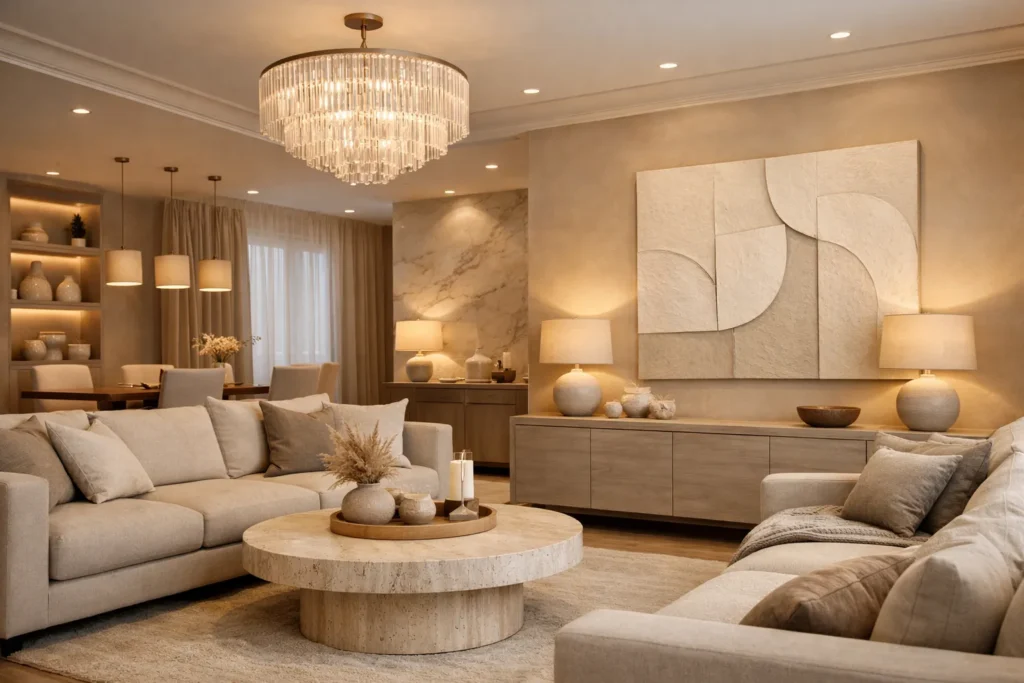
A premium interior starts with a calm and coordinated color foundation. Layered neutrals like warm white, beige, taupe, and greige create harmony and highlight textures, lighting, and materials.
Keeping similar undertones across the home makes the space feel connected, balanced, and thoughtfully designed.
Key Guidelines
- Choose warm neutrals instead of pure white walls
- Limit the palette to 3–4 coordinated shades
- Maintain similar undertones across all rooms
- Use darker shades only as subtle accents
- Let textures add contrast instead of bold colors
2. Layer Lighting Like a Designer
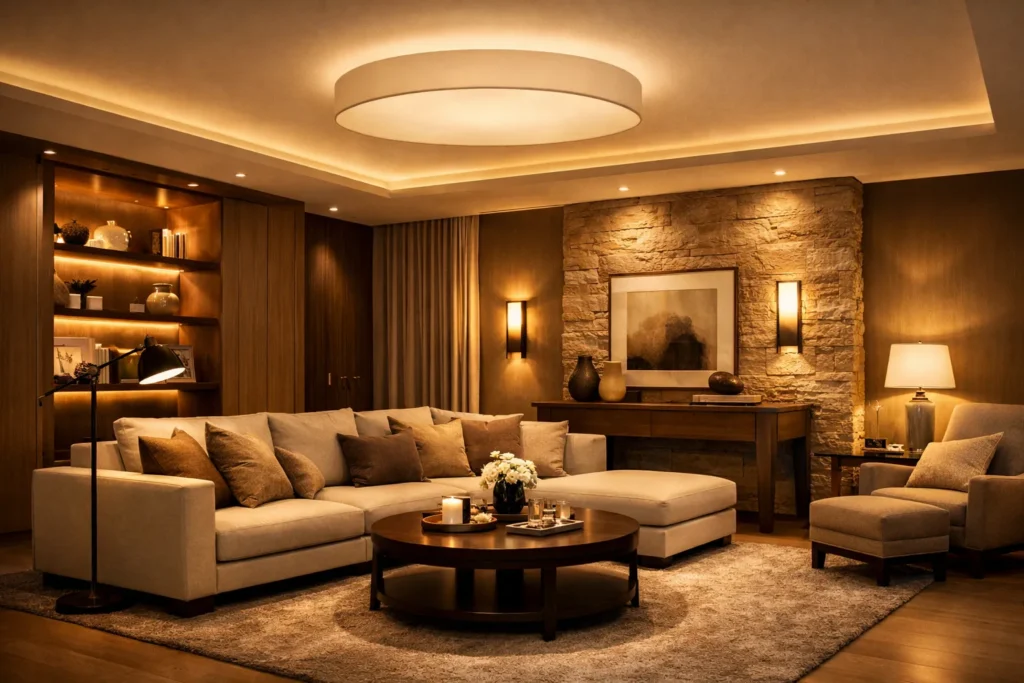
Lighting has a direct impact on how refined a home feels. Instead of depending on a single ceiling fixture, premium interiors use layered lighting to create depth, comfort, and visual interest throughout the space.
Key Guidelines
- Ambient lighting for overall brightness (ceiling lights)
- Task lighting for reading or work areas
- Accent lighting to highlight walls, décor, or textures
- Warm light temperature for a soft, relaxing atmosphere similar to boutique hotels
3. Add a Statement Piece
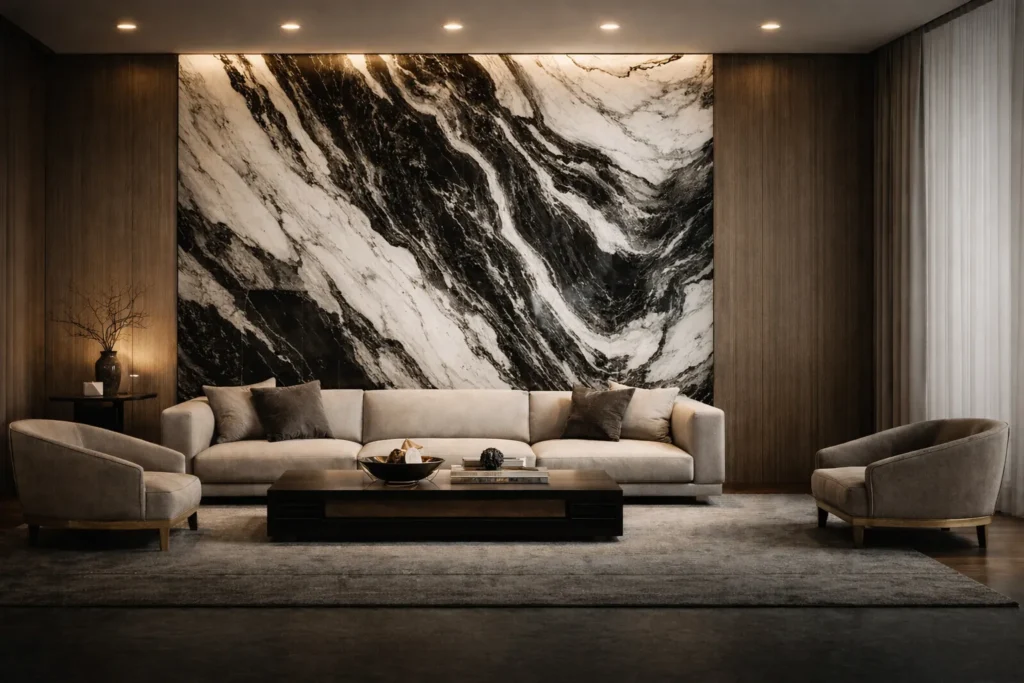
Premium interiors focus attention on a clear focal point rather than many small decorations. A single strong element gives the space identity and makes the design feel intentional and organized.
Key Guidelines
- Choose one dominant feature (artwork, chandelier, bold sofa, or textured wall)
- Keep surrounding décor minimal to avoid visual clutter
- Position the focal point where it’s immediately noticeable
- Let lighting subtly highlight the statement element
4. Upgrade Soft Furnishings & Textures
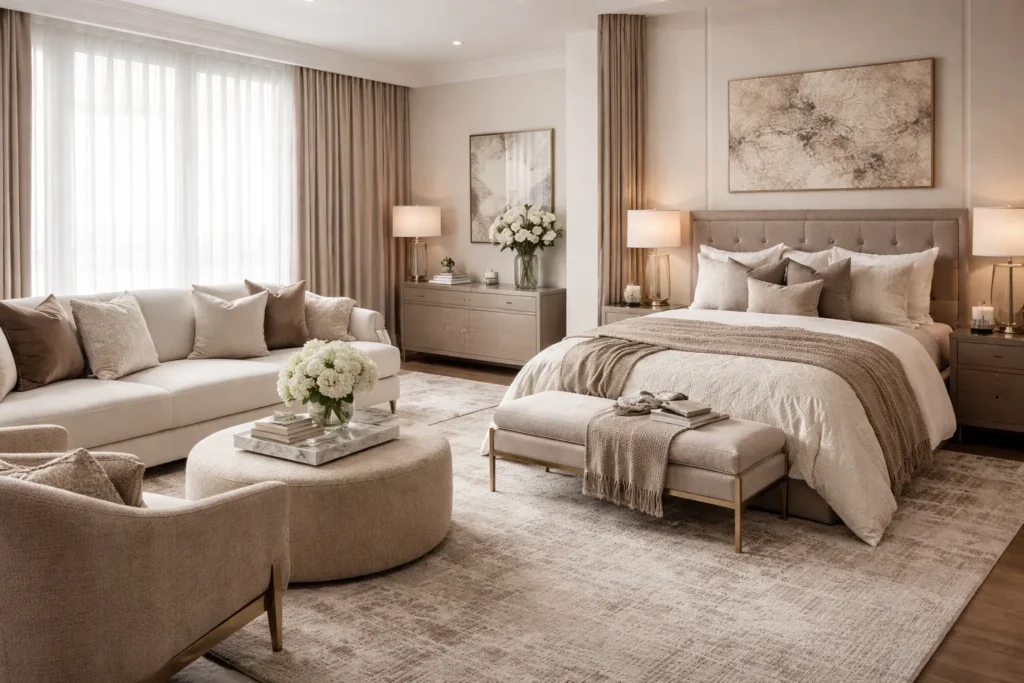
Fabric quality strongly influences how comfortable and refined a space feels. Premium interiors use layered textiles to add depth and warmth even without bold colors.
Key Guidelines
- Install floor-length curtains for a taller look
- Use structured cushions instead of flat pillows
- Layer bedding for a fuller appearance
- Prefer upholstered furniture for softness and comfort
- Combine multiple textures to create richness
5. Improve Hardware & Finishes
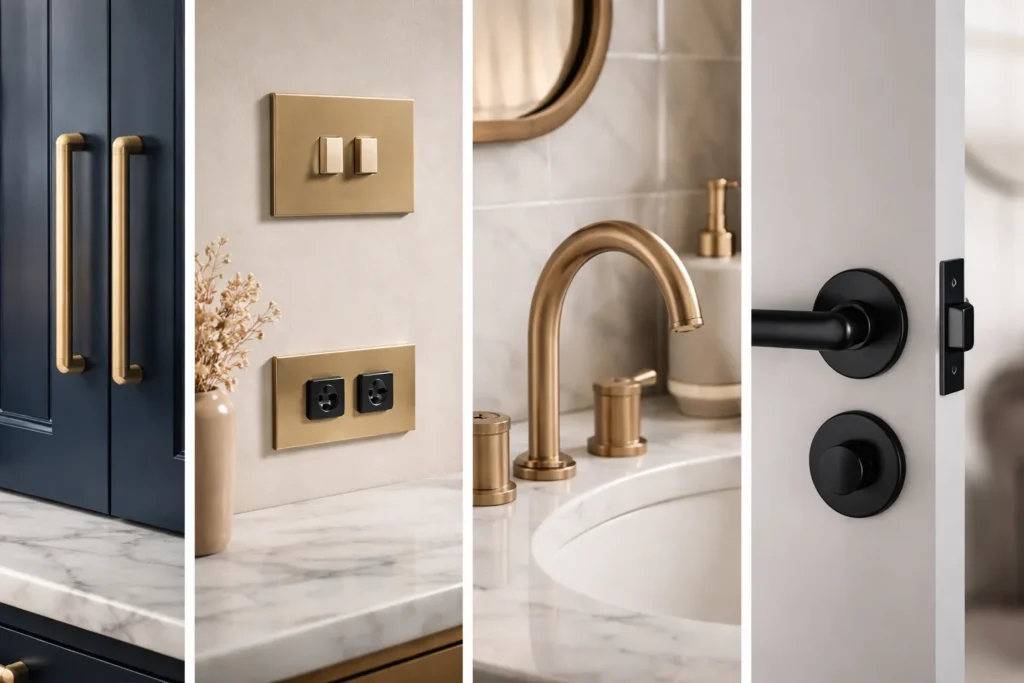
Small fittings significantly influence how polished a space appears. Coordinated hardware finishes make interiors feel intentional and well-designed.
Key Guidelines
- Upgrade door and cabinet handles
- Use consistent switch plates and electrical fittings
- Select refined faucet finishes
- Prefer brushed metal, matte black, or champagne tones for a premium look
6. Add Natural Materials
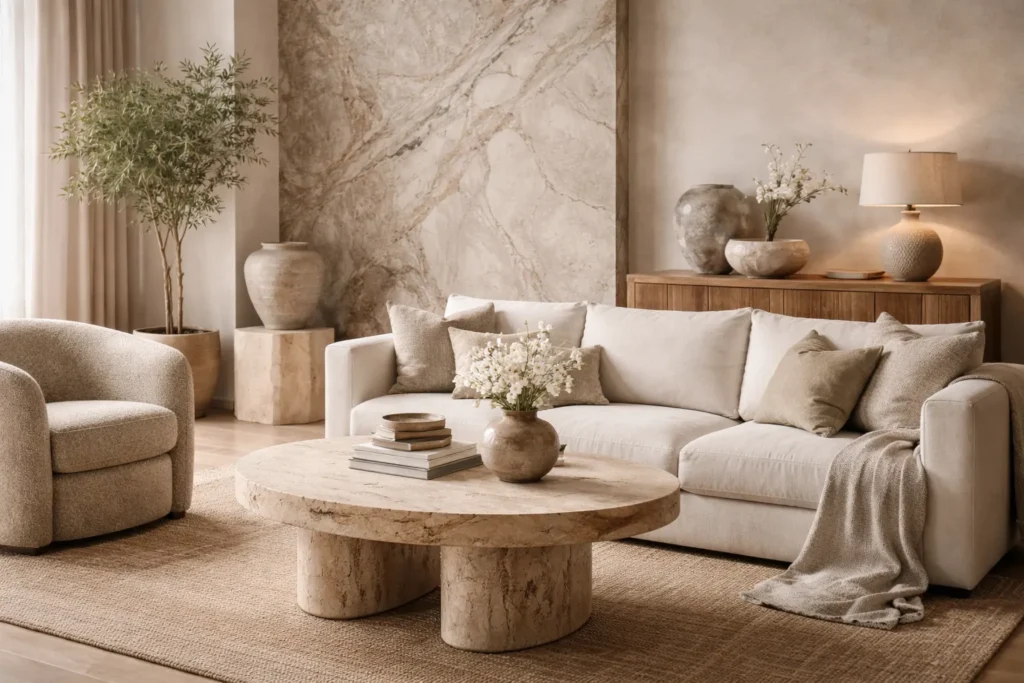
Natural materials bring warmth and authenticity that artificial finishes cannot replicate. Their subtle variations and textures make interiors feel more refined and timeless.
Key Guidelines
- Incorporate wood surfaces or furniture
- Use stone or marble textures for depth
- Add linen fabrics for softness
- Include ceramic décor elements
- Embrace natural imperfections for character
7. Create Symmetry
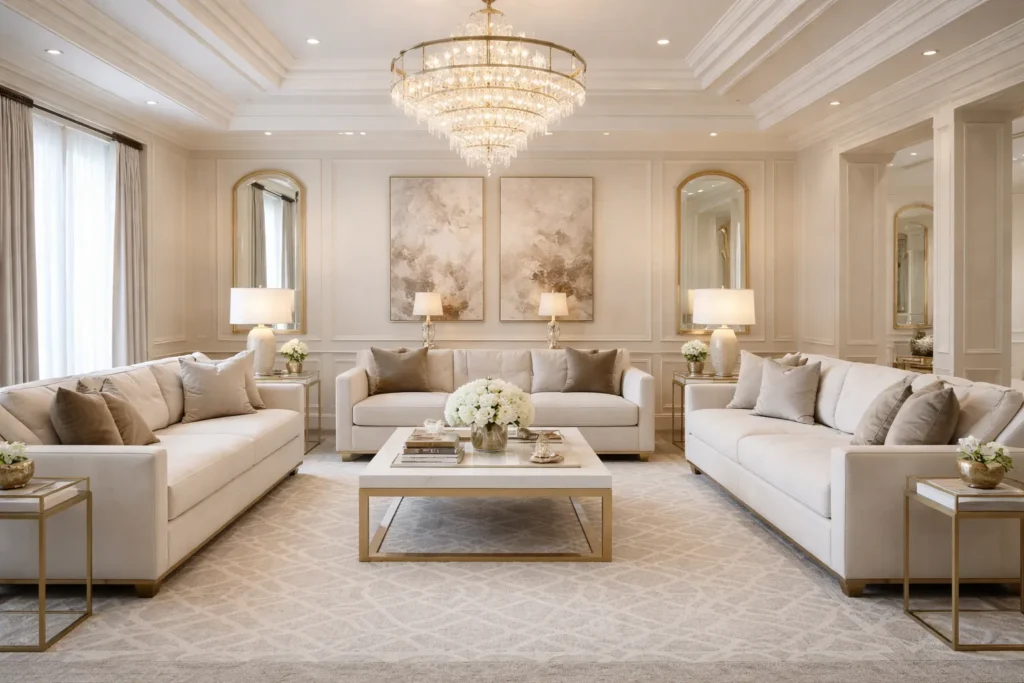
Symmetry brings visual order and makes a space feel calm and well-planned. Balanced arrangements naturally appear more refined and comfortable to the eye.
Key Guidelines
- Use matching bedside lamps or side tables
- Arrange sofa seating evenly
- Center rugs and key furniture pieces
- Keep alignment consistent across the layout
8. Hide Visual Clutter
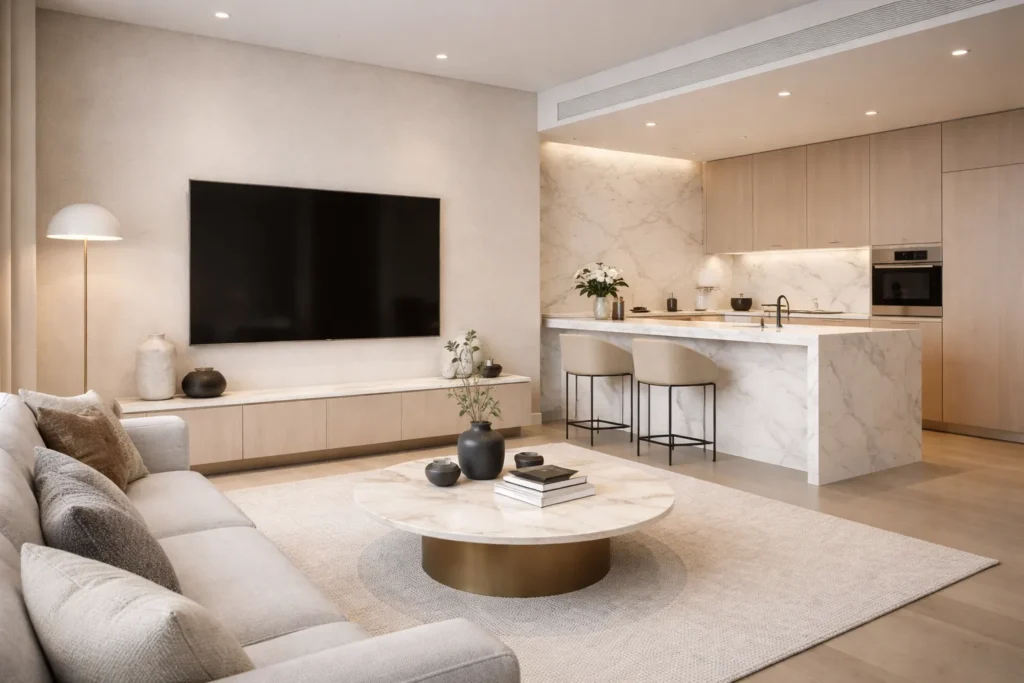
Visible wires, scattered accessories, and open storage quickly make a space feel unorganized. Premium interiors maintain a clean appearance through concealed storage and tidy surfaces.
Key Guidelines
- Hide cables and electronic wiring
- Use closed storage instead of open shelves
- Keep countertops and tables minimal
- Organize everyday items out of direct view
9. Use Height to Add Grandeur
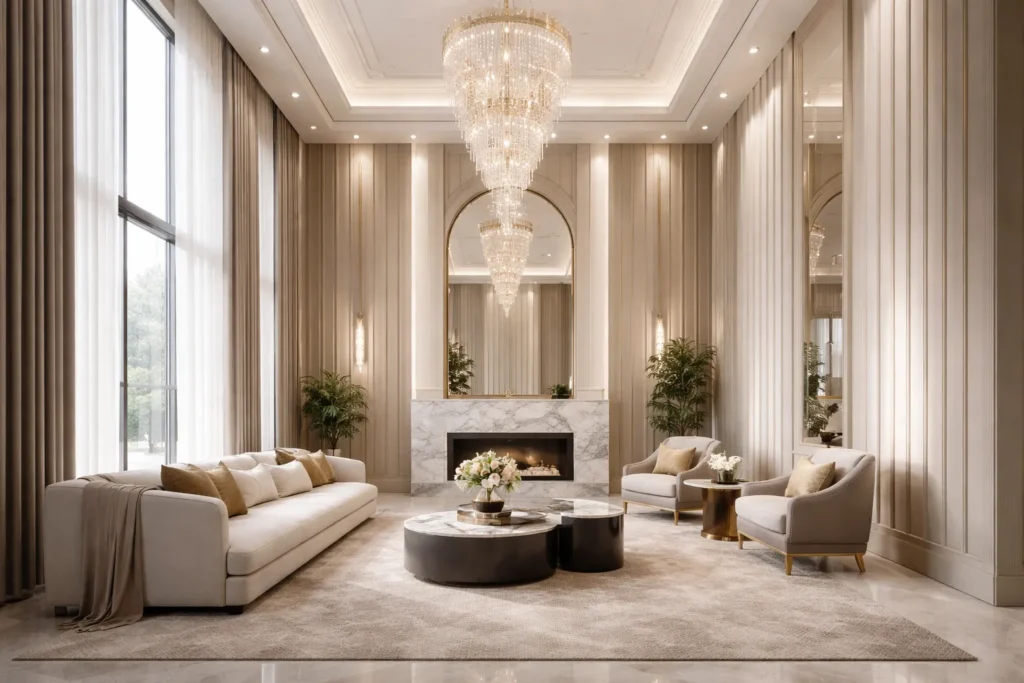
Vertical elements draw the eye upward and make rooms feel more spacious and elegant. Emphasizing height adds a sense of scale often seen in premium interiors.
Key Guidelines
- Install curtains close to the ceiling
- Add vertical wall panels for depth
- Use mirrors to enhance vertical perception
- Keep furniture proportion aligned with room height
10. Add Styling Layers
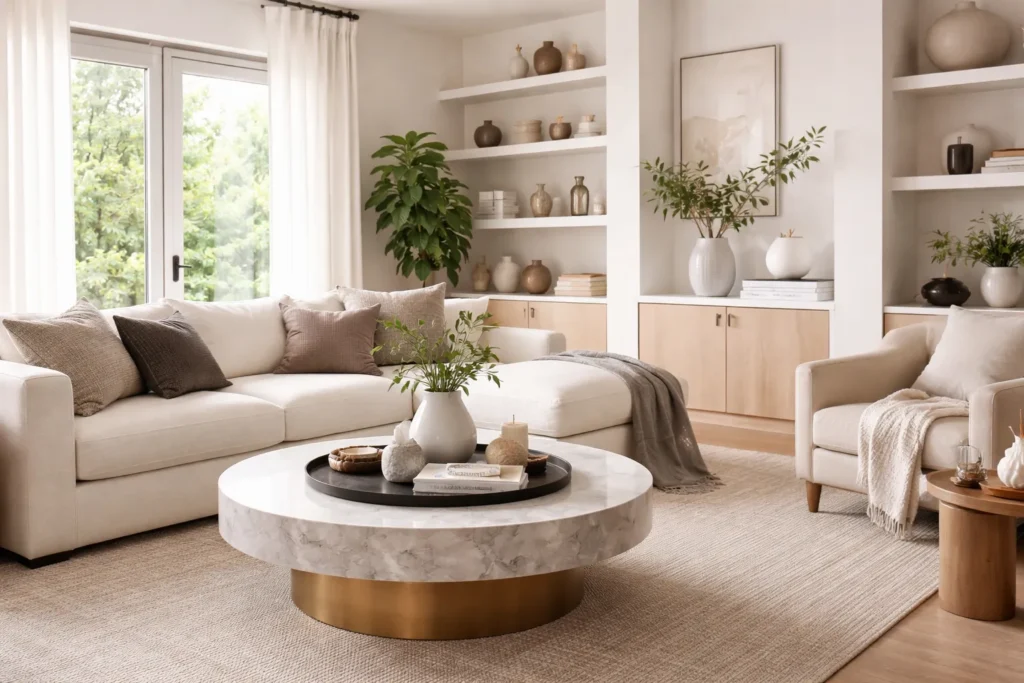
Final styling details give a home personality and warmth without making it look busy. Thoughtful accessories help the space feel lived-in yet refined.
Key Guidelines
- Stack a few books for visual depth
- Use trays to organize small items
- Add indoor plants for freshness
- Include minimal sculptural décor
- Introduce a subtle, consistent fragrance
How to Apply Premium Interior Design Ideas in Every Room
Applying luxury design principles room by room helps the entire home feel cohesive and thoughtfully planned. Instead of decorating randomly, focus on comfort, lighting, and material consistency in each space, as seen in many well-planned client home designs.
Living Room
The living room should feel welcoming and visually balanced since it’s the most used space. Following practical Living Room Home Interior Design Ideas, comfortable seating, layered lighting, and a clear focal point help the room look organized rather than crowded.
Bedroom
A premium bedroom prioritizes relaxation. Inspired by Luxury Bedroom Interior Design Ideas, soft textures, warm lighting, and minimal décor create a calm environment that supports rest and comfort.
Kitchen & Dining
Clean surfaces and consistent finishes make kitchens appear more refined. Organized storage and subtle lighting improve both usability and visual clarity.
Bathroom
A well-designed bathroom should feel simple and spa-like. Matching finishes, soft towels, and minimal accessories enhance cleanliness and elegance.
Common Mistakes That Reduce Elegance
Even good furniture can look unrefined when certain design mistakes are present. Premium interiors depend on restraint, proportion, and visual consistency, which is why many homeowners eventually consider professional interior design services to achieve balance across the entire space.
- Using cool white lighting: Cool lighting often feels harsh and uncomfortable in living spaces. It makes walls and furniture appear flat and less inviting. Warm lighting creates a softer and more relaxing atmosphere.
- Over-decorating shelves: Too many decorative items make a room look cluttered. The eye struggles to focus on anything important. Minimal styling feels cleaner and more refined.
- Matching complete furniture sets: Perfectly matching furniture looks artificial and staged. Rooms lose personality and depth. Mixing complementary pieces creates a more natural appearance.
- Choosing small rugs: Small rugs break the visual connection between furniture. The layout feels incomplete and unbalanced. Properly sized rugs anchor the entire seating area.
- Too many colors in one room: Multiple strong colors create visual chaos. The space feels busy instead of calm. A limited palette keeps the interior cohesive.
Where to Invest and Where to Save in Home Interior Design
A premium look does not require spending everywhere. The key is investing in elements that affect comfort and permanence, while keeping flexible or replaceable items budget-friendly.
Invest More In
- Lighting: Good lighting improves mood and highlights materials
- Curtains: Proper fabric and height change the entire room appearance
- Sofa: A comfortable, well-built sofa defines daily living quality
- Hardware finishes: Handles and fittings influence the perceived quality
Spend Less On
- Decorative accessories: Easy to update over time
- Trend-based décor: Styles change quickly
- Temporary styling items: Better replaced seasonally than heavily invested in
When to Consider Professional Design Help
There are situations where adding better furniture or décor still doesn’t improve how the home feels. This usually happens when the issue lies in layout planning, scale, circulation space, or visual balance rather than the quality of items. A well-designed interior depends on how elements relate to each other, not just what is purchased.
A professional interior designer evaluates room proportions, natural light direction, functional movement paths, and focal points before suggesting changes. Instead of replacing everything, small adjustments in placement, finishes, and material coordination often make the space feel complete and comfortable.
Seeking expert guidance is especially useful during renovation, space planning, or when multiple rooms need to feel connected. Proper planning prevents repeated purchases and helps achieve a cohesive design that looks intentional rather than gradually assembled.
Conclusion
Luxury interiors are defined more by thoughtful planning than by high spending. Balanced layouts, warm lighting, and carefully chosen materials create a refined atmosphere without relying on excessive decoration.
A well-designed home feels calm, comfortable, and cohesive because every element has a purpose. If you’re planning to upgrade your space, you can discuss your home design ideas with a professional to better understand layout, materials, and styling options before making changes.
Small, intentional improvements often create a bigger impact than frequent updates, helping the space remain timeless and welcoming.
FAQs
1. How can I make my home interior look premium on a budget?
Focus on lighting, neutral colors, decluttering, and quality fabrics. Small upgrades in layout and finishes create a bigger impact than buying more décor.
2. Which colors make a home look more luxurious?
Warm neutrals like beige, taupe, greige, and soft whites feel refined. Muted tones appear more elegant than bright or highly contrasting colors.
3. Does lighting really affect how expensive a home looks?
Yes, lighting controls depth and mood in a room. Layered warm lighting makes furniture and textures appear richer.
4. What is the most common mistake that makes interiors look cheap?
Overcrowding the space with furniture and accessories. Clean layouts with breathing space always look more premium.
5. When should you hire an interior designer?
Consider hiring a designer when the layout feels unbalanced or multiple rooms need coordination. Professional planning helps achieve a cohesive look and avoids repeated purchases.