
Introduction
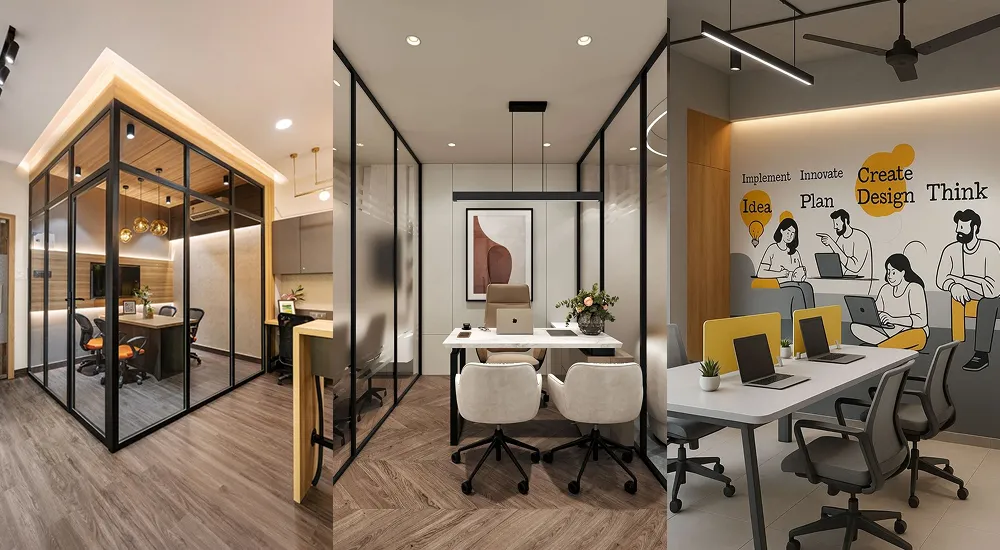
A well-designed office is no longer just about aesthetics. Today, office interior design ideas focus on improving productivity, employee wellbeing, brand perception, and space efficiency. Whether you are designing a corporate headquarters, startup workspace, or small office setup, the right interior strategy directly impacts performance and business growth.
Modern work culture demands flexibility, collaboration, comfort, and visual appeal. From ergonomic furniture to biophilic elements, every design decision influences how employees think, feel, and perform. Partnering with experienced professionals who specialize in office interior design services ensures that your workspace is not only visually appealing but also strategically planned for long-term functionality and efficiency.
In this comprehensive guide, we explore 11 powerful office interior design ideas that help you create a productive and modern workspace.
Why Office Interior Design Matters for Productivity
Office interior design directly impacts how employees focus, collaborate, and perform. A well-planned workspace improves efficiency, supports wellbeing, and strengthens brand perception.
Effective office interior design ideas help enhance:
- Employee concentration
- Team collaboration
- Mental comfort
- Professional brand image
- Client confidence
A cluttered or poorly lit office can reduce motivation and productivity. In contrast, a thoughtfully designed workspace promotes clarity, organization, and positive energy.
Modern office interior design balances functionality with aesthetics, ensuring the space supports daily operations while creating a productive and professional environment.
Office Interior Design Ideas for a Modern Workspace
1. Plan a Functional & Flexible Layout
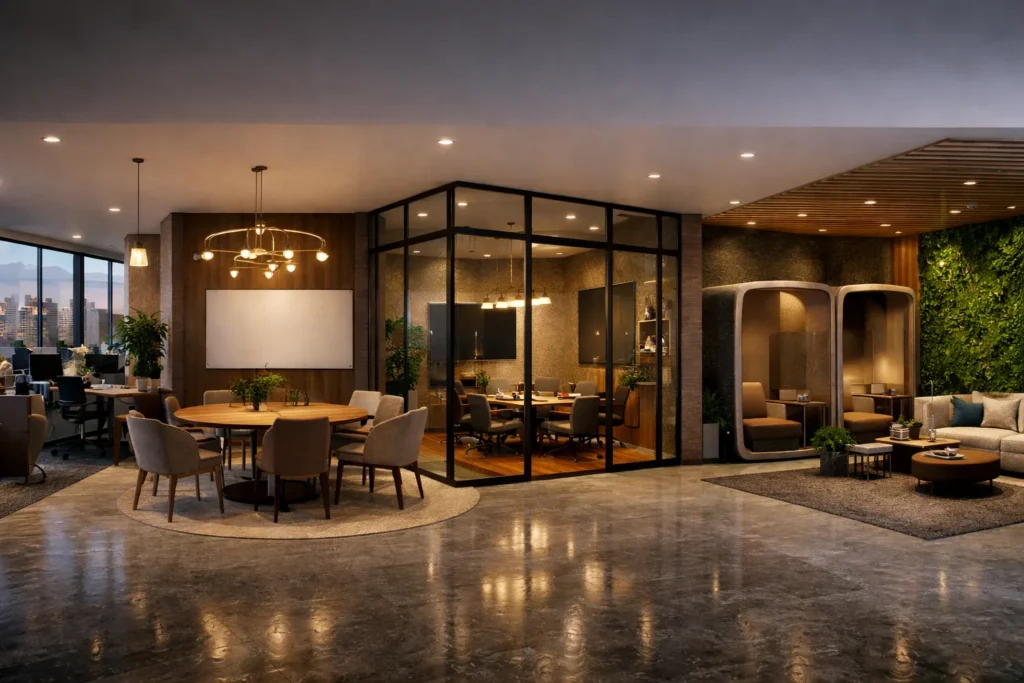
The foundation of any successful office interior design is layout planning.
A functional layout ensures smooth movement between departments and reduces unnecessary distractions. The popular concept of zoning divides the office into:
- Workstations
- Collaboration areas
- Meeting rooms
- Quiet zones
- Breakout spaces
Modern offices increasingly adopt flexible layouts that can adapt to changing team sizes and hybrid work models.
Layout Options:
- Open office layout
- Semi-open layout with partitions
- Cabin-based corporate layout
- Modular workstation design
A well-planned layout immediately improves productivity by reducing friction in daily workflow.
2. Maximize Natural Light & Layered Lighting
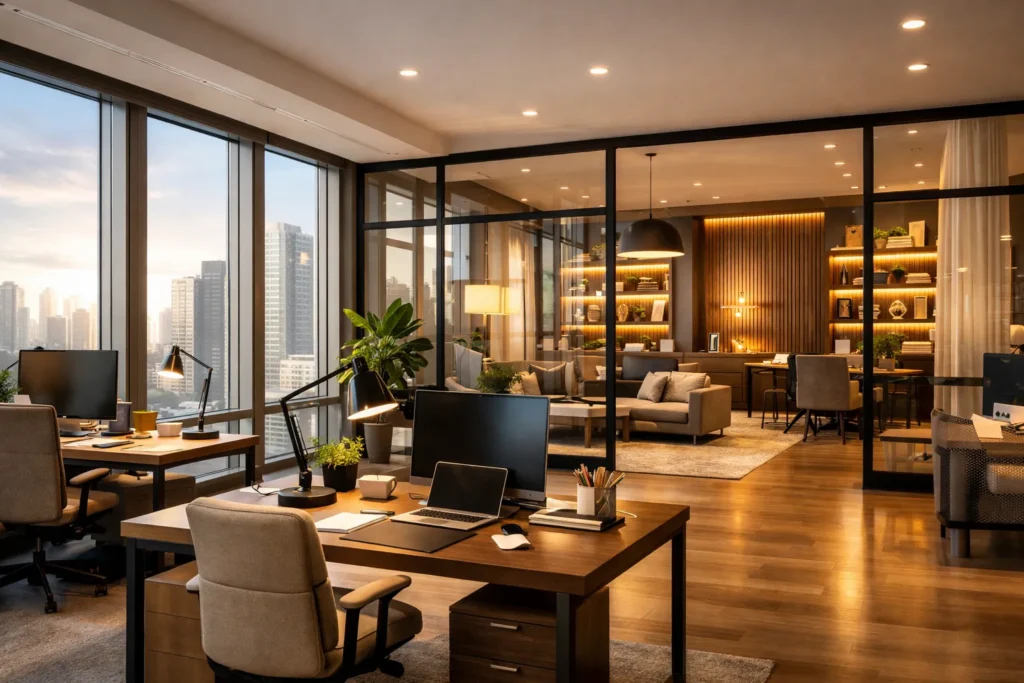
Lighting plays a major role in workplace efficiency.
Natural light boosts mood, reduces stress, and increases alertness. Offices designed with large windows, glass partitions, and open layouts allow daylight to flow freely.
Beyond natural light, modern offices use layered lighting:
- Ambient lighting for overall brightness
- Task lighting for desks and workstations
- Accent lighting for design features
Warm white lighting creates a welcoming environment, while overly harsh white light can make spaces feel clinical.
Good lighting improves both comfort and productivity.
3. Choose a Professional & Elegant Color Palette
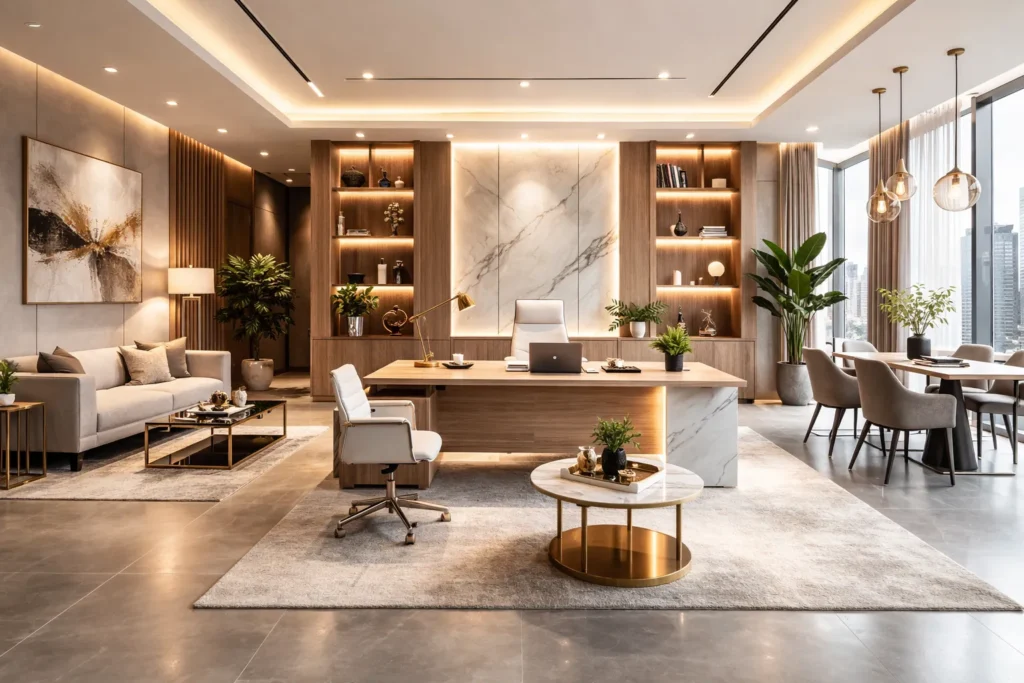
Color psychology significantly influences workplace behavior.
Neutral tones like white, beige, grey, and soft wood finishes create a calm and professional atmosphere. Accent colors aligned with your brand identity can add energy without overwhelming the space.
Popular Modern Office Color Combinations:
- White and warm wood
- Grey and matte black
- Beige with brass accents
- Deep green with natural textures
A balanced color scheme ensures the office feels modern, cohesive, and refined.
4. Invest in Ergonomic Furniture
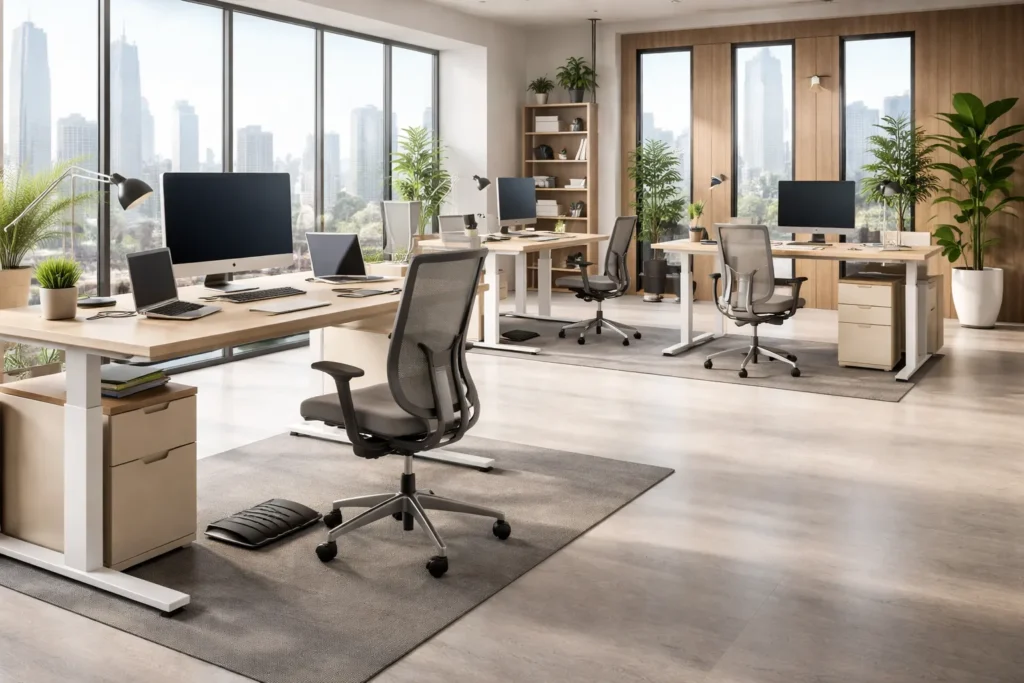
Furniture is not just decorative — it directly impacts employee health and efficiency.
Ergonomic office furniture supports posture and reduces fatigue. Essential elements include:
- Adjustable chairs with lumbar support
- Height-adjustable desks
- Proper desk-to-monitor alignment
- Footrests and keyboard positioning
Long-term benefits include reduced back pain, improved focus, and fewer health-related productivity issues.
Modern office interior design prioritizes comfort without compromising aesthetics.
5. Incorporate Biophilic Design Elements
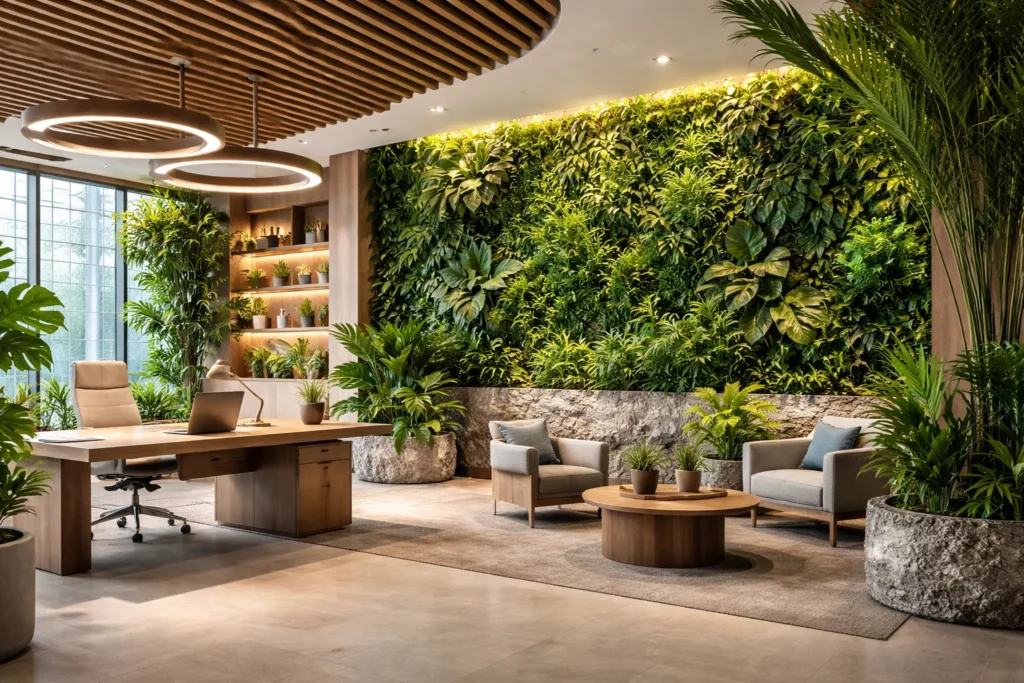
Biophilic design integrates natural elements into interior spaces.
Adding greenery and natural textures reduces stress and enhances creativity.
Effective Biophilic Additions:
- Indoor plants
- Living green walls
- Wooden finishes
- Stone textures
- Natural light optimization
Research shows that employees working in nature-inspired environments report higher satisfaction and engagement levels.
This design approach makes modern offices feel more inviting and balanced.
6. Create Collaborative Work Zones
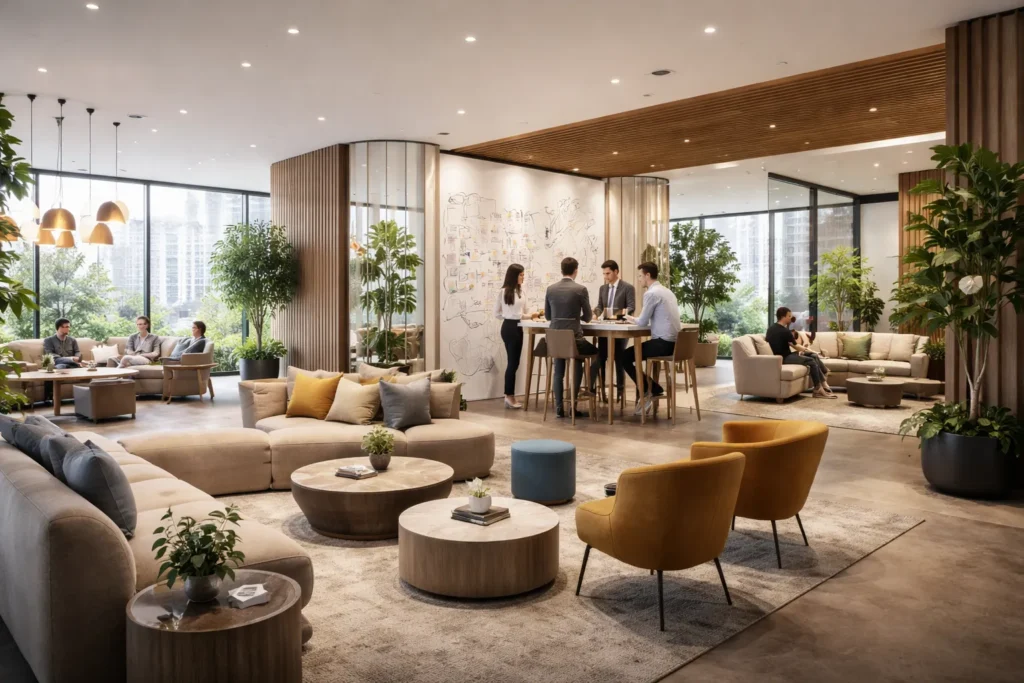
Collaboration is essential in today’s business environment.
Instead of relying only on formal meeting rooms, modern office interior design ideas include:
- Open discussion lounges
- Soft seating zones
- Informal breakout areas
- Brainstorming corners with writable walls
These spaces encourage spontaneous interaction and innovation.
Designing collaborative areas separately from focused work zones maintains balance between teamwork and concentration.
7. Design a Statement Reception Area
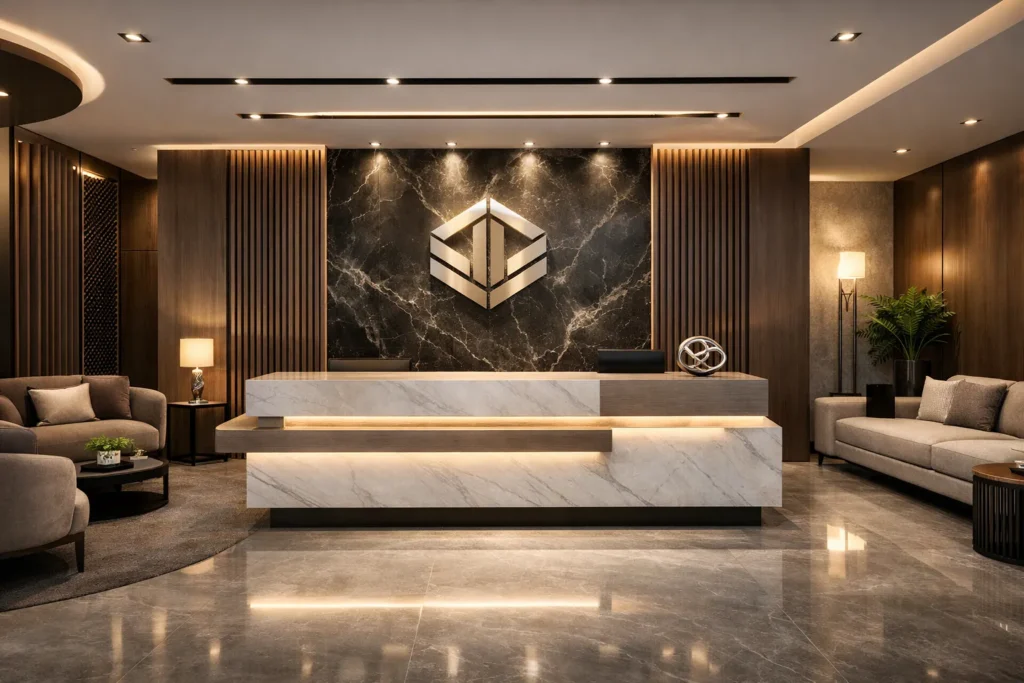
The reception area forms the first impression of your brand. A modern reception design should reflect professionalism, identity, and attention to detail. You can explore our office interior portfolio to see how thoughtfully designed reception spaces enhance brand perception and create a lasting impact.
Key Elements:
- Minimal yet impactful reception desk
- Brand logo feature wall
- Comfortable waiting seating
- Accent lighting
- Clean and clutter-free surfaces
A strong reception design builds trust and communicates brand credibility instantly.
8. Integrate Smart Storage Solutions
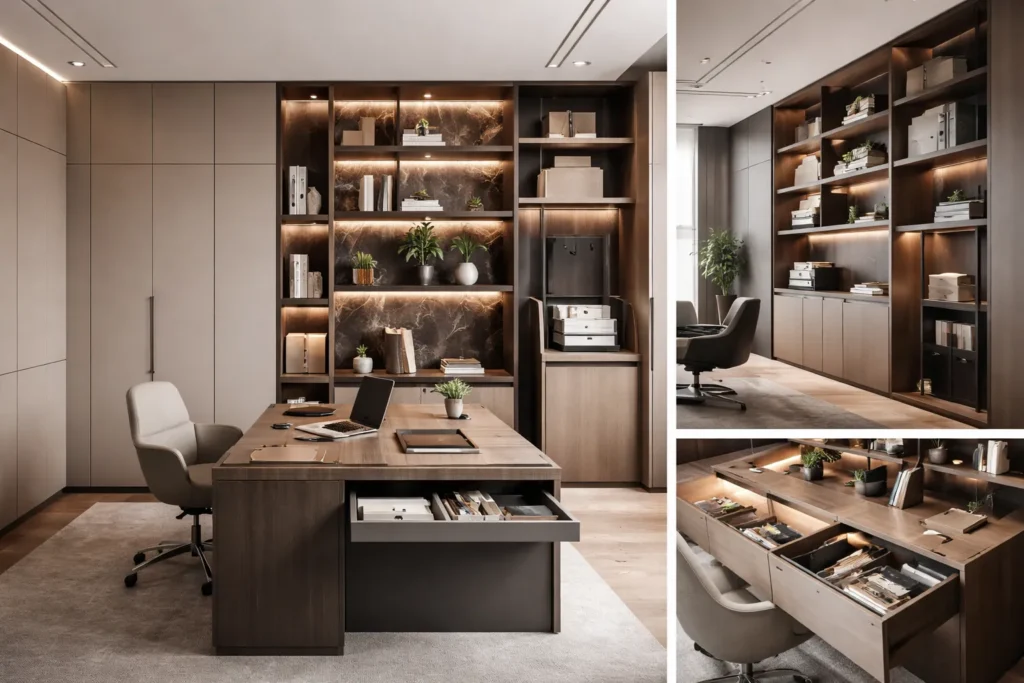
Clutter reduces efficiency and creates visual stress.
Modern offices prioritize concealed and organized storage solutions:
- Handleless cabinets
- Built-in shelving
- Hidden storage compartments
- Vertical storage units
Well-organized storage keeps workstations clean and enhances the overall visual appeal of the office.
A tidy environment naturally supports focus and professionalism.
9. Improve Acoustics & Sound Control
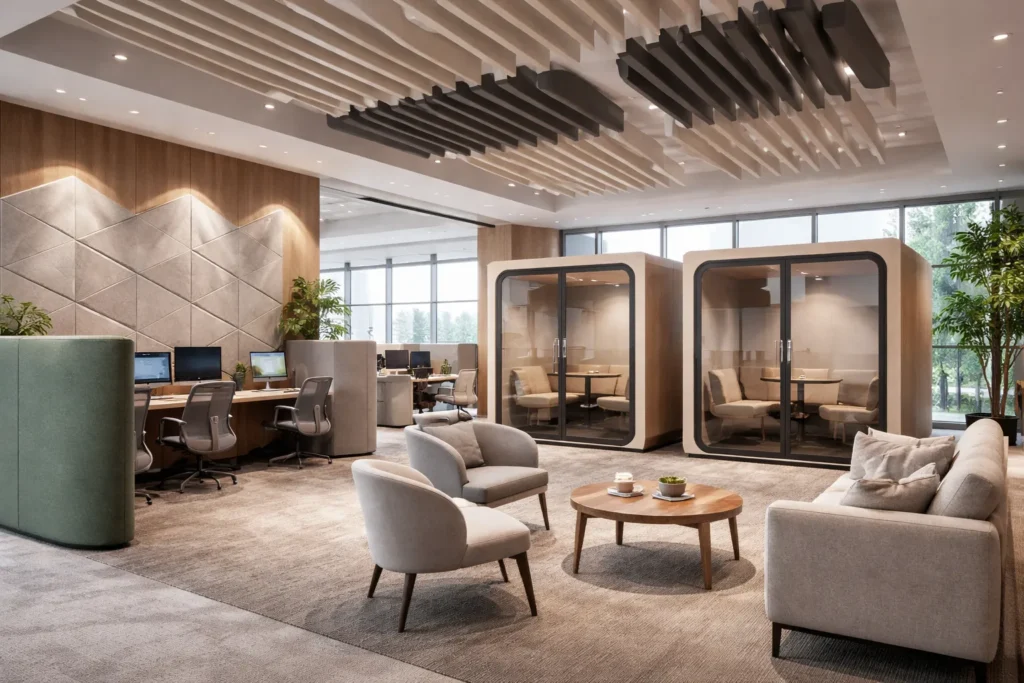
Noise is one of the biggest productivity killers in open offices.
Modern office interior design includes acoustic planning to reduce distractions.
Soundproofing Solutions:
- Acoustic panels
- Fabric partitions
- Carpet flooring
- Sound-absorbing ceiling panels
- Enclosed meeting pods
Proper acoustic control ensures employees can concentrate without unnecessary disturbances.
10. Seamlessly Integrate Technology
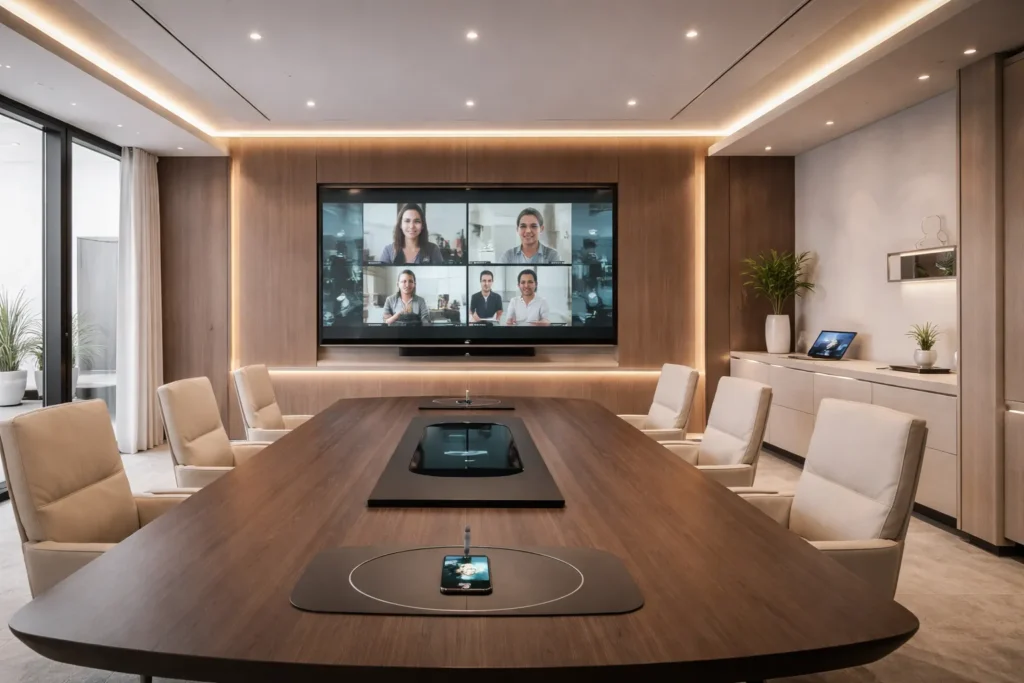
Technology should blend into the workspace rather than create clutter.
Modern office interior design integrates:
- Concealed cable management
- Smart conference rooms
- Wireless charging stations
- Built-in screens
- Automated lighting systems
A clean technological setup improves workflow efficiency while maintaining a minimalist look.
11. Reflect Brand Identity Through Design
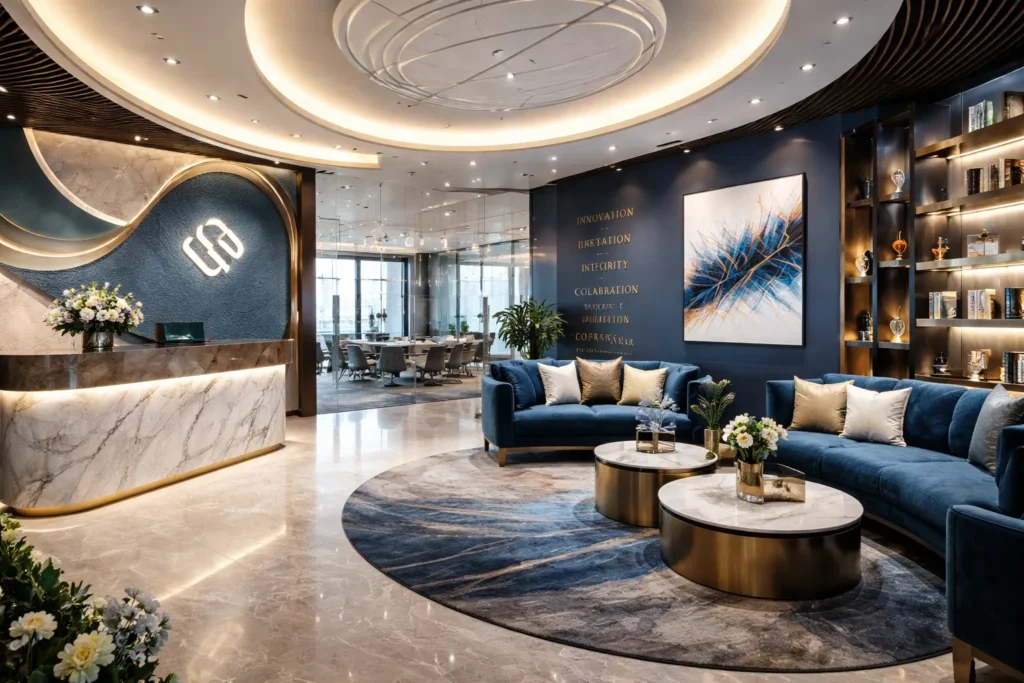
Your office should visually represent your brand.
Design elements can subtly incorporate:
- Brand colors
- Typography walls
- Custom artwork
- Company values displayed through design
- Thematic interior concepts
This creates a strong internal culture while reinforcing brand identity for clients and visitors.
An office that reflects brand values feels purposeful rather than generic.
Latest Office Interior Design Trends in 2026
Office interior design continues to evolve as businesses adapt to hybrid work models, employee wellbeing priorities, and modern operational needs. In 2026, the focus is on flexibility, sustainability, and productivity-driven environments.
Modern office interior design trends emphasize smart planning and employee-centric layouts that support both collaboration and focused work.
Trending Concepts in 2026:
- Hybrid workspace planning with adaptable layouts for remote and in-office teams
- Flexible seating systems that allow mobility and shared workstations
- Sustainable materials such as eco-friendly finishes and energy-efficient lighting
- Minimalist aesthetics with clean lines and clutter-free surfaces
- Multi-functional furniture that maximizes space efficiency
- Wellness-oriented design including natural light, greenery, and ergonomic setups
Businesses are moving away from rigid office structures and embracing adaptive environments that enhance comfort, efficiency, and long-term performance. A well-designed modern workspace now balances technology, sustainability, and human experience to drive productivity.
Office Interior Design Cost Factors
Understanding office interior design cost is essential before starting your project. The overall budget depends on multiple factors, including the scope of work, material quality, and level of customization required.
When planning your office interior, costs typically depend on:
- Office size (usually calculated per square foot)
- Material selection for flooring, ceilings, and finishes
- Custom furniture requirements
- Technology integration and smart systems
- Lighting design complexity
- Civil work and renovation needs
Premium finishes, bespoke furniture, and advanced automation systems naturally increase the investment. On the other hand, modular designs and standardized materials can help optimize costs without compromising functionality.
Working with experienced professionals for office interior planning ensures accurate budgeting, transparent cost breakdowns, and efficient execution — helping you avoid unexpected expenses while achieving a productive and modern workspace.
How to Plan Your Office Interior Project
Proper planning is the foundation of a successful office interior design project. A structured approach ensures smooth execution, cost control, and a workspace that aligns with your business goals.
To ensure successful execution:
- Conduct a detailed space assessment to understand layout potential and constraints
- Define functional requirements based on team size, workflow, and future expansion
- Establish a clear budget with cost estimates per square foot
- Create a strong design concept aligned with your brand identity
- Finalize material and furniture selection based on durability and aesthetics
- Develop a realistic timeline and execution plan to avoid delays
Careful planning minimizes unexpected challenges, controls expenses, and ensures the final office interior design supports productivity, efficiency, and long-term business growth.
Conclusion
Office interior design is more than decoration; it is a strategic investment in productivity, employee wellbeing, and brand positioning. A well-designed workspace enhances performance, supports collaboration, and strengthens your company’s professional image.
By applying these 11 office interior design ideas, businesses can create a modern, functional, and future-ready environment. When layout, lighting, furniture, and branding align, the office becomes a true performance-driven space.
If you’re planning to upgrade your workspace, contact our office interior design experts to create a modern office that reflects your vision and drives business growth.
Frequently Asked Questions
What is the best layout for a modern office?
A flexible layout that balances open collaboration areas with private focus zones works best. Zoning helps improve workflow while supporting both teamwork and concentration.
How does office interior design improve productivity?
Good lighting, ergonomic furniture, acoustic control, and organized layouts enhance focus and comfort. A well-designed office reduces distractions and improves overall efficiency.
What colors are best for office interiors?
Neutral tones like grey, white, and beige create a calm and professional atmosphere. Subtle brand accents can add personality without overwhelming the workspace.
How much does office interior design cost?
Costs depend on office size, material quality, customization, and location. Pricing is typically calculated per square foot based on project scope.
How long does office interior renovation take?
Most office interior projects take between 4 to 12 weeks. The timeline varies depending on design complexity and civil work requirements.